8 hours ago
1
When I began trying to get pregnant, I didn’t know exactly why I wanted to have a child, but I knew my parents had something to do with the desire. Not directly: They never told me I should have children and would never have pressured me into making a decision either way. I felt their influence in terms of heritage. How did my parents’ choice to become parents—and my perceived effect of that choice on their lives—seep into my decision making? How did the African-American, Jamaican, Lebanese, and Haitian cultures they grew up in influence their decision and mine?
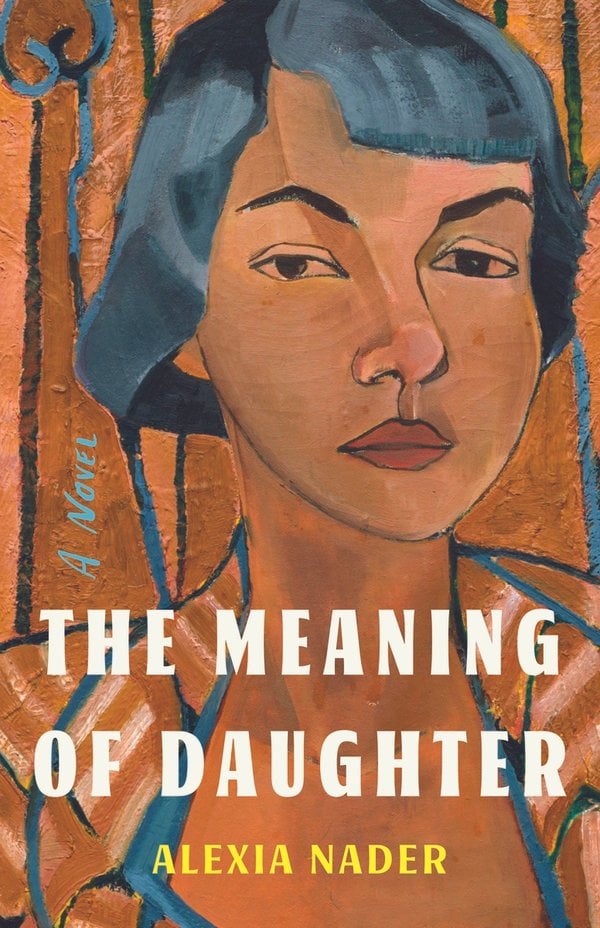
Even though the choice to have children is often framed as one that involves one or two people, this ignores the truth that families and cultures often influence the decision. I wanted to explore this in my multigenerational novel, The Meaning of Daughter. I started with the first-generation character, Merjan, a woman who wants to dedicate herself completely to her art, even though her family and her Lebanese-Haitian community expect her to be solely a wife and mother. I traced how immigration, cultural values, and personal ambition influenced what she thought about having children. My curiosity about the effects of her choices around motherhood led me through the lives of her daughter and her daughter’s daughter, spanning seven decades and three countries.
The authors of the novels on this list have shown me that there are many variations to the questions I grappled with in my novel about what goes into reproductive decisions. Whether it’s by showing how the death of a parent can shape the meaning of becoming a parent, or how cultural conflicts between a parent and child raised in different countries can manifest in conversations about having children, each author adds a complex layer to the discussion.
Still Born by Guadalupe Nettel, translated by Rosalind Harvey
Still Born ties together two stories: one that begins with the narrator’s decision not to have children, and one that centers on her friend’s decision to try to get pregnant. Early in the novel, the narrator has a conversation with her mother about her choice to get her tubes tied. At first it seems her mother is upset, but she ends up being more understanding than the narrator had expected. However, her mother can’t help but add, “It’s important to have someone to love, someone to take care of. It makes us less selfish.” The protagonist takes this to heart, as the novel redefines motherhood to include the narrator’s care of her community. She discovers the pleasures and meaning of caring for her friend who is struggling to support a baby with severe disabilities, her neighbor who is recovering from an abusive relationship, and her neighbor’s young son.
Burnt Sugar by Avni Doshi
The first part of Burnt Sugar takes the reader through a thicket of history and emotions surrounding a complicated mother-daughter relationship. The protagonist must find a way to be at peace with caring for her mother, who has dementia, despite her history of abandonment by her mother as a child. When, two-thirds of the way into the novel, the protagonist decides to have a baby, her relationship with her mother is framed in a new light. For this protagonist, having a baby takes the form of revenge against her mother, and serves as a way to start a mother-child relationship free from the burdens of the past. The book’s gothic ending speaks to the paradox of this complex desire, and the power of intergenerational trauma to shape a family’s course despite the intentions to escape it.
Cold Enough for Snow by Jessica Au
On its surface, this novel is about one woman’s trip to Japan with her mother. They walk around Tokyo taking photographs, visiting art museums, and eating in restaurants. Slowly and subtly, the narrative drama reveals itself: The narrator is contemplating whether or not to have children. She weighs the private self—her thoughts, observations, and attraction to beauty and wonder—against the communal self that cares for others. At one point in the novel, the narrator’s mother says to the narrator that when she was growing up, “[her mother] had never thought of herself in isolation, but rather as inextricably linked to others.” This proves to be an important focal point of the novel, as the narrator continues on a solo portion of the journey, leaving the reader doubting whether the narrator’s mother was ever really on the trip. Alone and frightened on a hike that has gone on too long, she considers what she has inherited from her mother, and her inability to distinguish where her mother ends and she begins.
One Leg on Earth by ‘Pemi Aguda
In the Lagos of One Leg on Earth, pregnant women are drowning themselves en masse, seemingly drawn to the water by a supernatural force. After finding herself unexpectedly pregnant, the protagonist of the novel must grapple with her desire to continue the pregnancy despite the danger it brings into her life. When faced with one of her friend’s criticism of her choice to keep her baby, Yosoye thinks about the chance to cultivate the type of intimacy she never had with her own mother, “Could someone with a mother like that understand what a child might mean for Yosoye? Yosoye who’d never even had her mother to call her own?” Aguda is adept at showing both the draw and the sense of danger inherent in motherhood, as she paints a rich landscape of pregnancy as a psychological, social, and artistic force.
Breasts and Eggs by Mieko Kawakami, translated by Sam Bett and David Boyd
The heart of this novel lies in a complicated desire shared by two sisters, Natsuko and Makiko, who both want to exert control over their bodies in ways that don’t make sense to the other. In the first section of the novel, Natsuko, the narrator, hosts Makiko and Makiko’s daughter in her apartment in Tokyo, as Makiko looks into getting breast implants. Natsuko doesn’t understand Makiko’s obsession with changing her breasts and doesn’t make an effort to understand what’s driving her sister either. In the novel’s second section, the tables are turned. Natsuko wants to try to have a child on her own. Makiko wonders why Natsuko would choose to be a single mother—knowing from Makiko’s life as well as their shared childhood—how hard it can be. Natsuko ends up turning to friends, colleagues, and other people in her community to help her understand her desire to have a child. The novel not only explores the power of women fully owning their bodily desires, but also the psychic pain of not truly being accepted on your own terms by those closest to you.
Red at the Bone Jacqueline Woodson
What Is a Mother Allowed to Write?
Part of me believes that as a mother I’m committing some sin of impropriety by writing the ugliest parts of my life
Red at the Bone explores the impacts of an unexpected teen pregnancy, focusing not just on the young father and mother, but their parents too. Through the novel’s first-person rotating point of view, Woodson is able to jump backwards and forwards in time, and we see the teen couple’s parents both as parents—worried about how the pregnancy will affect their children’s futures—and as grandparents, who couldn’t imagine wishing their granddaughter had never been conceived. Through these jumps in time we can also see how the young couple’s respective relationships with their parents affected their desire for intimacy with their daughter once she was born. The novel’s expansive gaze does not shy away from the wounding emotions that can accompany an unexpected pregnancy, as well as the potential for these wounds to change over time.

Sight by Jesse Greengrass
Pregnant with her second child, the narrator of Sight finds herself spurred to revisit her memories of the period right before her mother died and another time long before that, when she stayed at her grandmother’s house as a little girl. What is it about pregnancy that has caused the narrator to want to probe her memory in this way? Sight explores this question through essayistic musings about subjects as varied as the invention of the x-ray, the relationship between Sigmund and Anna Freud, and the creation of the first anatomical drawing of a fetus in utero. These investigations frame the narrator’s memories of her mother and grandmother, as well as her experience around her first pregnancy, which are as tender as they are fraught.
The post 7 Books That Weigh the Choice of Motherhood appeared first on Electric Literature.